Elevated access is common in industrial plants, workshops, warehouses, and logistics facilities. Choosing the right equipment is essential for worker safety, comfort, productivity, and efficiency.
While both industrial step stools and platform ladders provide access to elevated areas, they serve different purposes. Understanding their key differences helps facilities reduce fall risks, improve ergonomics, and select the safest equipment for each task.
What Is an Industrial Step Stool?
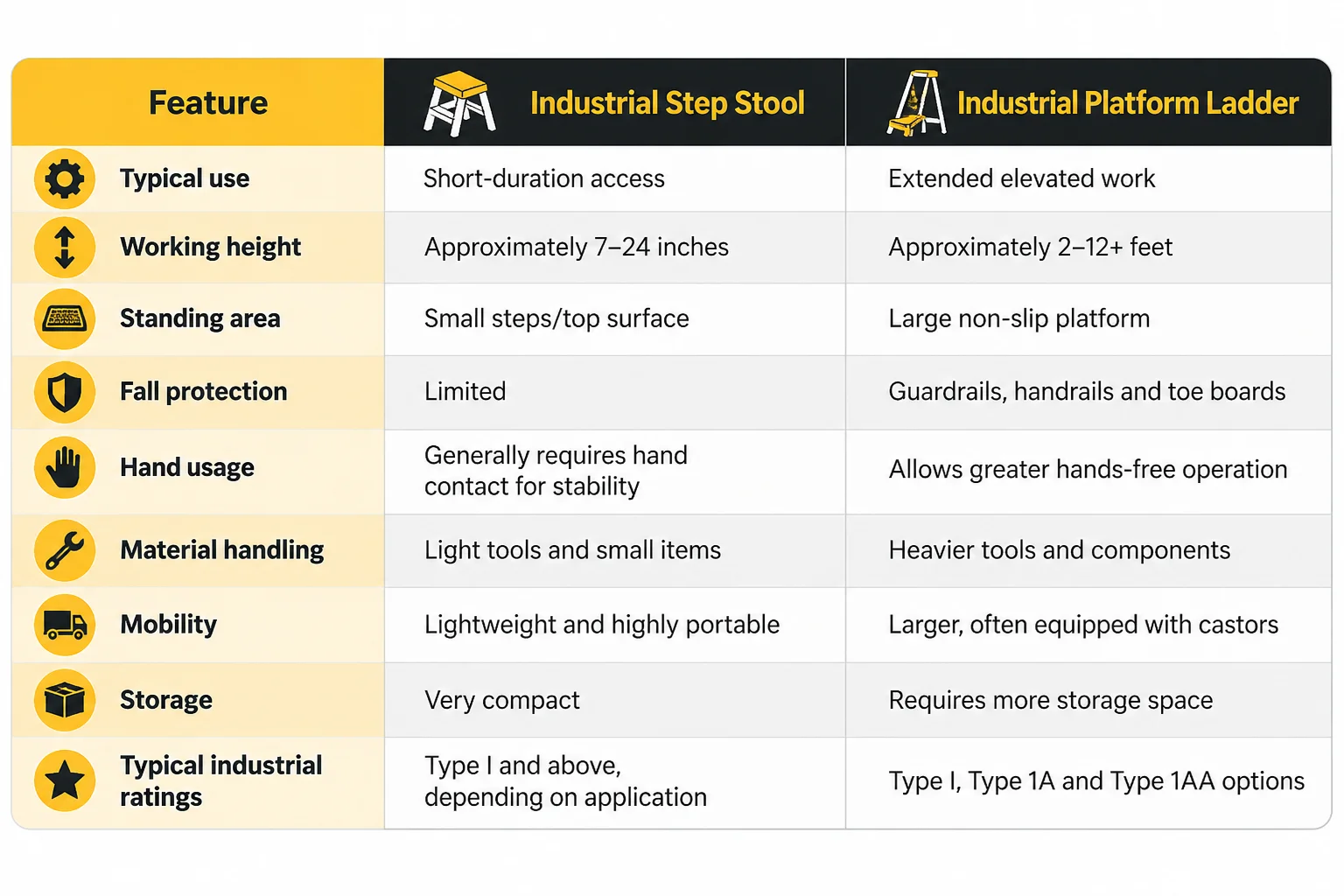
An industrial step stool is a compact access solution designed for short-duration, low-level tasks. Most models have one to four steps and provide approximately 7–24 inches of elevation.
They are commonly made from aluminum, steel, fiberglass, or molded plastic. Their small footprint makes them practical for confined workspaces, warehouses, workshops, and areas around machinery. Folding models can also be stored easily when not in use.
However, their compact design comes with limitations. Step stools typically offer less standing space and fewer fall-protection features than platform ladders, making them better suited to quick, low-height tasks rather than prolonged elevated work.
When Is a Step Stool Appropriate?
A step stool is ideal for short, low-height tasks where only a small boost is needed. Common uses include:
- Reading machine gauges or sight glasses
- Reaching low shelves
- Performing quick inspections
- Retrieving items that are slightly out of reach
- Working in narrow spaces
For example, a technician checking a CNC machine pressure gauge may find a step stool more convenient than using a larger platform ladder.
What Is an Industrial Platform Ladder?
An industrial platform ladder is designed for longer and more demanding elevated tasks. Unlike a step stool, it provides a large, stable standing platform for working at height.
Common features include:
- Wide, non-slip platforms
- Guardrails and handrails
- Toe boards
- Safety gates or barriers
- Locking or retractable wheels
These features provide better stability and protection, making platform ladders suitable for maintenance, warehouse work, inspections, and other tasks that require workers to stay elevated for longer periods. They range from compact two-step models to larger units for greater working heights.
Step Stool vs. Platform Ladder: The Key Differences
The most important distinction is how the equipment is intended to be used.
A step stool is primarily a solution for quick, low-level access. A platform ladder is designed for longer-duration work, greater working heights, and tasks requiring greater stability.
Ergonomics: Why Standing Space Matters
One major advantage of a platform ladder is its larger standing area.
Standing on a narrow step for too long can cause foot fatigue and leg strain. Workers may also need to lean or shift their weight to reach the work area.
A wider platform gives workers a more stable and comfortable place to stand, especially when using both hands for tasks such as installing parts, routing conduit, handling materials, or using diagnostic equipment.
For tasks lasting more than a few minutes, better standing space can improve both comfort and work efficiency.
Aluminum or Fiberglass: Which Material Should You Choose?
Aluminum
Aluminum is lightweight, durable, and resistant to corrosion. It is commonly used in workshops, stockrooms, and assembly areas.
However, aluminum conducts electricity. It should not be used near energized electrical equipment where contact with electricity is possible.
Fiberglass
Fiberglass is non-conductive, making it a common choice for electrical work.
When working near electrical systems, always use properly rated fiberglass equipment and follow the required electrical-safety procedures.
When Should You Use a Step Stool?
Choose an industrial step stool when:
- The required height increase is small
- The task is brief
- Only lightweight tools are required
- The workspace is too narrow for a platform ladder
- The worker can perform the task safely without overreaching
A step stool is an excellent solution when mobility and compact storage are more important than extended standing comfort.
When Should You Use a Platform Ladder?
A platform ladder is generally the better choice when:
- Work will continue for more than a few minutes
- The worker needs to use both hands
- Heavy or bulky components must be handled
- The work area is above chest height
- Continuous overhead work is required
- Greater standing stability and fall protection are needed
Examples include servicing conveyor drives, HVAC ducting, lighting fixtures, overhead junction boxes, and multi-tier warehouse racking.
Choose the Right Access Equipment for Your Facility
The right access equipment can improve workplace safety, efficiency, and operator comfort. Whether you need a compact step stool for quick-access tasks or a heavy-duty platform ladder for extended industrial work, choosing the right solution starts with understanding your application.
Need help selecting the right industrial access equipment?
Contact our team today to discuss your requirements and find the right solution for your workplace.