Choosing the right ladder is essential for HVAC technicians who work at height, install air-conditioning systems, perform maintenance, and handle electrical or mechanical equipment. While both platform trolley ladders and standard A-shape ladders are commonly used in industrial and commercial environments, they serve different purposes.
The right choice can improve workplace safety, technician productivity, and overall job efficiency.
So, should your HVAC team invest in a platform trolley ladder or a standard A-shape ladder?
1. What Is a Platform Trolley Ladder?
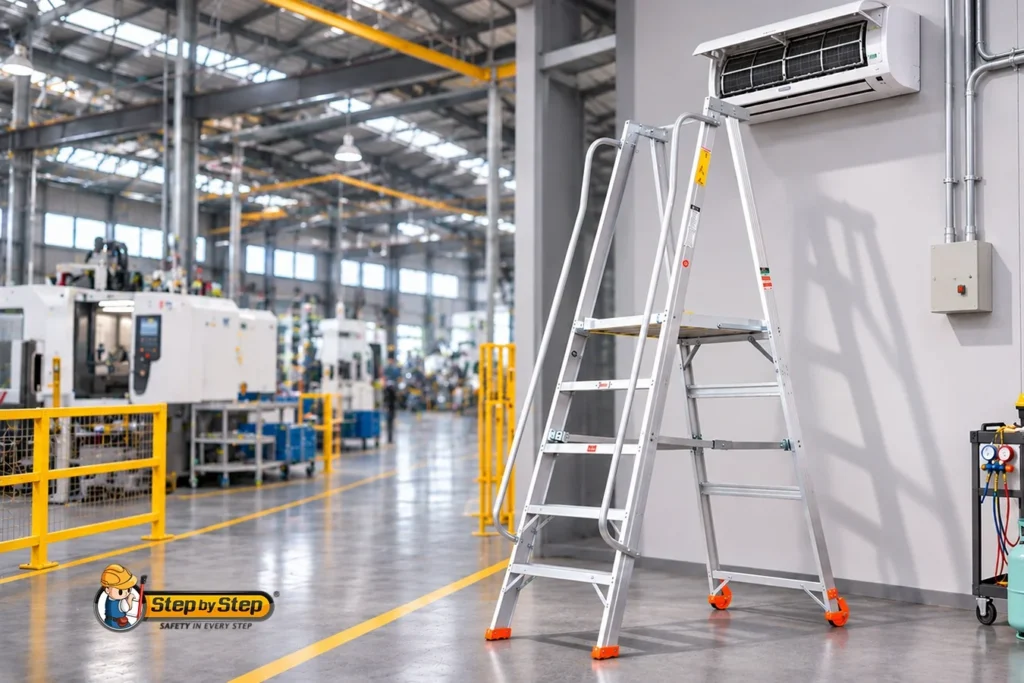
A platform trolley ladder is a mobile access ladder designed with a stable standing platform, integrated steps, handrails, and wheels for easy movement. Depending on the model, it may also feature a safety gate, locking casters, and a larger working platform.
Unlike conventional ladders, platform trolley ladders allow technicians to stand on a designated platform while performing tasks that require both hands.
Key Features of a Platform Trolley Ladder:
- Wide and stable standing platform.
- Integrated handrails for additional support.
- Lockable wheels for controlled positioning.
- Larger working area for improved movement.
- Safety gates or guardrails on selected models.
- Designed for frequent access tasks in industrial environments.
For HVAC teams, these ladders are particularly useful when working on ceiling-mounted air-conditioning units, ductwork, ventilation systems, and overhead installations.
2. What Is a Standard A-Shape Ladder?
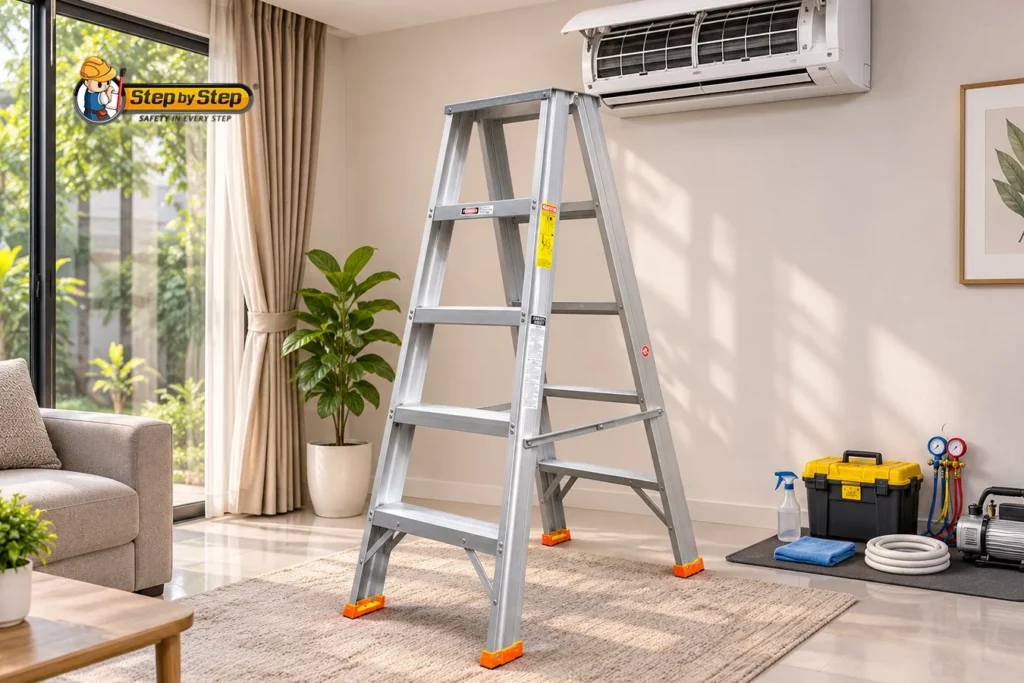
A standard A-shape ladder, also known as a step ladder, features two sets of legs connected by hinges to form an A-shaped structure when opened.
It is a popular choice among HVAC technicians because of its portability, simple design, and versatility.
Key Features of a Standard A-Shape Ladder:
- Lightweight and easy to transport.
- Foldable design for convenient storage.
- Quick setup without additional equipment.
- Available in different heights and materials.
- Suitable for short-duration maintenance and installation tasks.
A-shape ladders are commonly used for basic air-conditioning servicing, inspecting indoor units, replacing filters, and performing light maintenance work.
However, their smaller standing area and limited working space may make certain extended tasks less comfortable.
3. Platform Trolley Ladder vs Standard A-Shape Ladder: Key Differences
Understanding the differences between these two ladder types can help HVAC businesses select equipment that matches their daily operations.
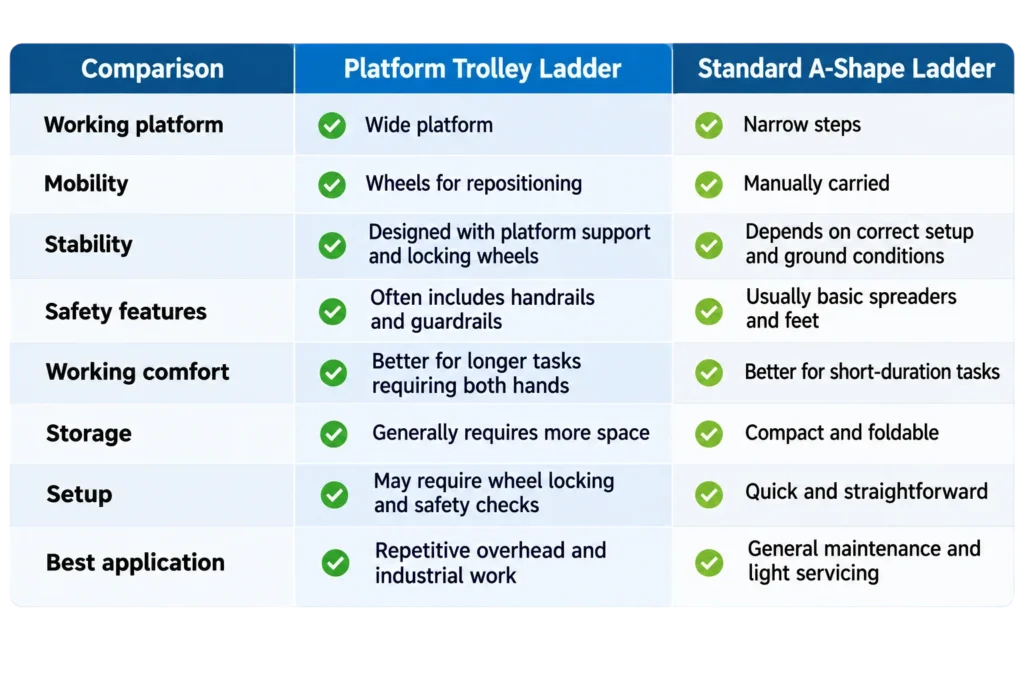
The main difference: A platform trolley ladder is designed to provide a more spacious and controlled working position, while a standard A-shape ladder prioritises portability and convenience.
4. Why Should HVAC Teams Consider a Platform Trolley Ladder?
HVAC technicians regularly perform tasks that involve reaching overhead components, handling tools, and maintaining awkward working positions.
A platform trolley ladder can offer several operational advantages.
A. Better Working Stability
A wider platform gives technicians more standing space compared with conventional ladder steps.
When properly positioned on a suitable, level surface with its wheels locked, a platform trolley ladder can provide a more stable working position.
This is especially beneficial when servicing ceiling-mounted air-conditioning units or inspecting ventilation equipment.
B. Improved Working Comfort
HVAC maintenance can involve extended periods of overhead work. Standing on a designated platform can provide more room to adjust foot positioning and maintain a comfortable working posture.
This may help reduce unnecessary repositioning during repetitive tasks.
C. Easier Movement Between Work Areas
The integrated wheels make it easier to move the ladder between maintenance points without repeatedly folding and carrying it.
For larger commercial buildings, factories, and warehouses, this can save time when technicians need to access multiple overhead locations.
However, the ladder must be moved according to the manufacturer’s instructions, with technicians off the platform and the wheels properly secured before climbing.
D. Additional Safety Features
Many industrial platform trolley ladders incorporate handrails, guardrails, safety gates, and locking wheels.
These features provide additional protection when used correctly.
For HVAC companies, investing in suitable access equipment is an important part of building a safer working environment.
5. When Is a Standard A-Shape Ladder the Better Choice?
Although platform trolley ladders offer several advantages, a standard A-shape ladder remains practical for many HVAC applications.
Consider an A-shape ladder when:
- Working in confined spaces: Its compact footprint makes it suitable for smaller rooms and restricted access areas.
- Performing quick maintenance: Filter replacement and basic inspections may not require a large working platform.
- Moving between different locations: Lightweight models are easier to carry between rooms and job sites.
- Working with limited storage: Foldable ladders require less storage space.
- Managing equipment costs: Standard step ladders are generally more affordable than industrial mobile platform ladders.
The key is to choose a ladder that matches the task rather than assuming that one ladder type is suitable for every HVAC application.
6. Which Ladder Is Safer for HVAC Technicians?
Safety should be one of the most important considerations when selecting access equipment.
Neither ladder type is automatically safe simply because of its design. Proper selection, inspection, setup, and usage are essential.
For Platform Trolley Ladders:
- Ensure the floor is level and suitable for the ladder.
- Engage all wheel-locking mechanisms before climbing.
- Check handrails, guardrails, and safety gates.
- Never move the ladder while someone is standing on it unless the specific equipment is expressly designed and approved for that operation.
- Follow the manufacturer’s maximum load capacity.
- Do not lean beyond the platform’s safe working area.
For Standard A-Shape Ladders:
- Fully open the ladder and lock its spreaders.
- Place all feet on a firm, level, non-slip surface.
- Inspect hinges, steps, feet, and locking mechanisms.
- Maintain three points of contact when climbing.
- Avoid overreaching or standing on prohibited top steps.
- Select the correct ladder height for the task.
For Malaysian workplaces, employers should also consider applicable Occupational Safety and Health requirements and relevant ladder safety standards.
A proper risk assessment should determine the most suitable access equipment for each job.
7. How to Choose the Right Ladder for Your HVAC Business
Before purchasing a ladder, consider the following factors.
1. Type of HVAC Work
Does your team mainly perform residential air-conditioning servicing, or does it handle large commercial and industrial installations? For frequent overhead work in larger facilities, a platform trolley ladder may provide greater practical benefits. For general servicing and smaller maintenance jobs, an A-shape ladder may be sufficient.
2. Working Height
Choose equipment with an appropriate platform or standing height for the task. Never select a ladder based on maximum reach alone. Consider the manufacturer’s working-height guidance and the technician’s safe standing position.
3. Frequency of Use
If technicians frequently access elevated equipment throughout the day, a platform trolley ladder may improve workflow and reduce repeated ladder handling. For occasional maintenance, a standard A-shape ladder may offer better value.
4. Available Working Space
Check the width of access routes, doorways, floor conditions, and available storage areas. A platform trolley ladder needs sufficient clearance for movement and positioning.
5. Budget and Long-Term Value
Look beyond the initial purchase price. Consider durability, maintenance requirements, replacement parts, safety features, and the expected frequency of use. A suitable industrial ladder can be a worthwhile long-term investment when it supports frequent operations.
8. Platform Trolley Ladder vs A-Shape Ladder: Our Recommendation
So, which ladder should your HVAC team use?
The answer depends on your working environment and operational requirements.
Choose a Platform Trolley Ladder if:
- Your technicians regularly perform overhead maintenance.
- Your projects involve commercial buildings or industrial facilities.
- Workers need a larger standing platform.
- Your team frequently moves between elevated work locations.
- Additional integrated safety features are a priority.
Choose a Standard A-Shape Ladder if:
- Your work involves general air-conditioning servicing.
- Your technicians operate in small or confined spaces.
- Portability and compact storage are important.
- Most tasks are short-duration maintenance activities.
- You need a practical solution for occasional access work.
For HVAC businesses handling different types of projects, having both ladder types available may be the most practical approach.
A platform trolley ladder can support repetitive industrial maintenance, while an A-shape ladder can handle everyday servicing and smaller jobs.
Invest in the Right Access Equipment for Your HVAC Team
Both platform trolley ladders and standard A-shape ladders have important roles in HVAC operations.
A standard A-shape ladder offers portability, flexibility, and convenience for everyday maintenance. A platform trolley ladder provides a larger working area, easier repositioning, and additional safety features for suitable industrial applications.
Ultimately, the best ladder is the one that matches your technicians’ working requirements, site conditions, and safety needs.
Looking to improve your HVAC team’s workplace safety and efficiency? Explore suitable industrial platform trolley ladders and access equipment to find a solution that supports your daily operations.